A Decade of Accelerated IP Growth
Indonesia recorded 339,304 intellectual property applications in 2024, compared with 74,893 in 2015, a 4.5 times increase over ten years. The data, drawn from the 2025 DGIP IP Outlook Report published by Indonesia’s Directorate General of Intellectual Property (“DGIP”), points to changes in how both domestic and international businesses approach IP protection in the country.
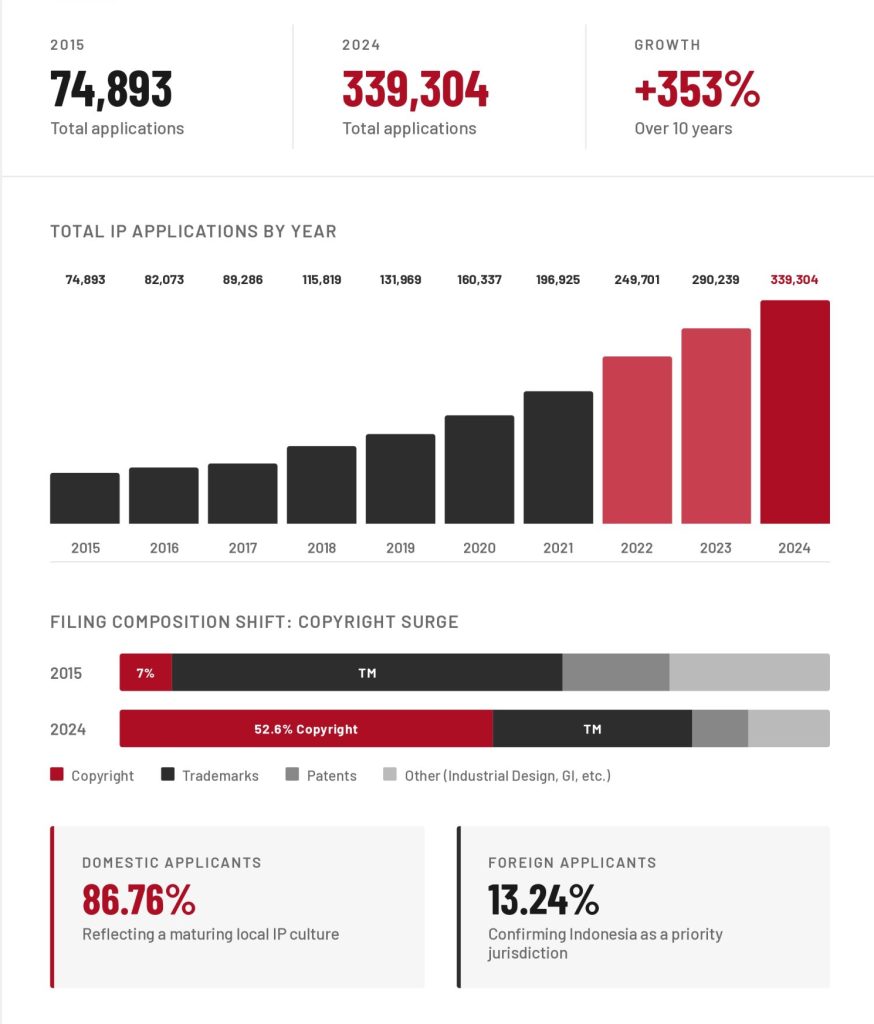
Year-on-Year Growth
Between 2015 and 2017, annual IP filings rose from 74,893 to 89,286. The pace increased from 2018 onward, reaching 115,819 that year. By 2020, annual IP filings had risen to 160,337 despite the pandemic. Post-2020, the growth became significantly stronger: 196,925 in 2021, 249,701 in 2022, 290,239 in 2023, and 339,304 in 2024.
Two factors have driven this growth. First, the DGIP’s digital transformation, including the rollout of the e-seal system, has reduced administrative friction and processing times. Second, legislative reforms have strengthened IP protection, giving applicants greater confidence to protect their IP rights in Indonesia.
Over Half of Filings Are Copyright
The most significant compositional shift is in copyright. In 2015, copyright applications represented 7.4% of total IP filings. By 2024, that figure had risen to 52.6%, making copyright the single largest category of IP applications in Indonesia.
Several factors explain this. Indonesia’s Copyright Law provides automatic legal protection upon creation, offering certainty without complicated procedures. The DGIP’s e-seal system has further simplified the registration process. Meanwhile, the expanding digital economy, spanning content creation, software development, music, and design, stimulates more creators and businesses to formalise their rights.
Filing Origins: 86.76% Domestic, 13.24% Foreign
86.76% of total IP applications came from domestic sources and 13.24% from abroad. The domestic dominance reflects a maturing local IP culture, particularly among MSMEs. The foreign share, while smaller in proportion, remains significant given the overall volume increase.
The Top 5 MSME Classes
Trademark data provides a more granular picture. Among domestic filings from micro, small, and medium enterprises (MSMEs), five trademark classes dominate:
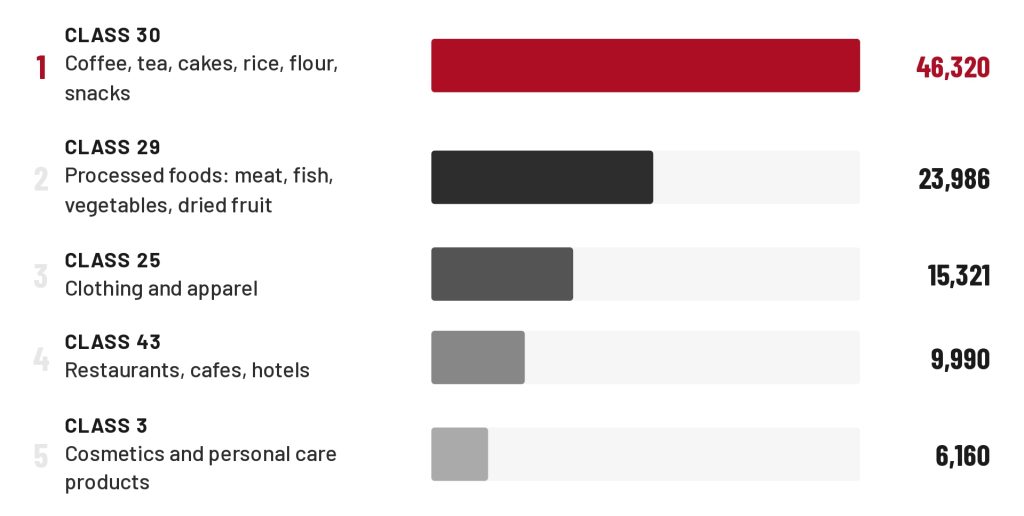
Class 30’s lead is substantial, nearly double Class 29, reflecting Indonesia’s large food and beverage sector, where products are increasingly sold through digital platforms and social media. MSMEs in this space are formalising brands for products that were previously unbranded, driven by the recognition that a registered trademark functions as both a legal shield and a commercial asset.
Practical Implications
The numbers provide an overview of the current filing situation in Indonesia. The trademark landscape is becoming increasingly competitive, Early filing remains the most effective strategy to avoid delays caused by potential conflicts with domestic applicants.
The copyright surge also means that enforcement activity is likely to increase. As more rights are formally recorded, more disputes will arise over digital content, software, and creative works. Companies with unrecorded copyrights in Indonesia may find themselves at a disadvantage.
For patent holders, the broader context of rising IP awareness supports the enforcement environment. Courts and regulators are handling more IP matters, building institutional capacity that benefits all rights holders.
Looking Ahead
Businesses that treat IP protection as a strategic priority, rather than a compliance afterthought, are better positioned in this market. SKC Law advises clients across all IP categories on filing strategy, portfolio management, and enforcement in Indonesia.
For guidance on navigating these developments, contact our team at enquiries@skclaw.id.
Follow us on LinkedIn for updates on IP in Indonesia.
Submit a custom inquiry via our Contact Page.
This content is provided for general information only and does not constitute legal advice. For advice on specific matters, contact enquiries@skclaw.id.