Destruction of Over 34,000 Counterfeit Bearings in Jakarta
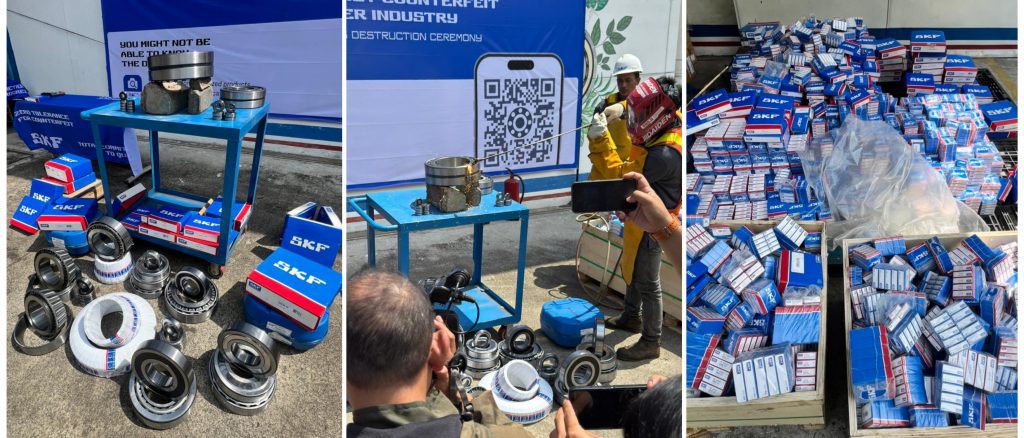
On 5 February 2026, SKF Group Brand Protection and SKF Indonesia, in coordination with Indonesian police authorities, attended the destruction of more than 34,000 counterfeit SKF bearings in Jakarta. The seized goods, weighing 13.3 metric tons and valued at approximately IDR 9.5 billion, were confiscated during a series of coordinated enforcement actions with SKC Law.
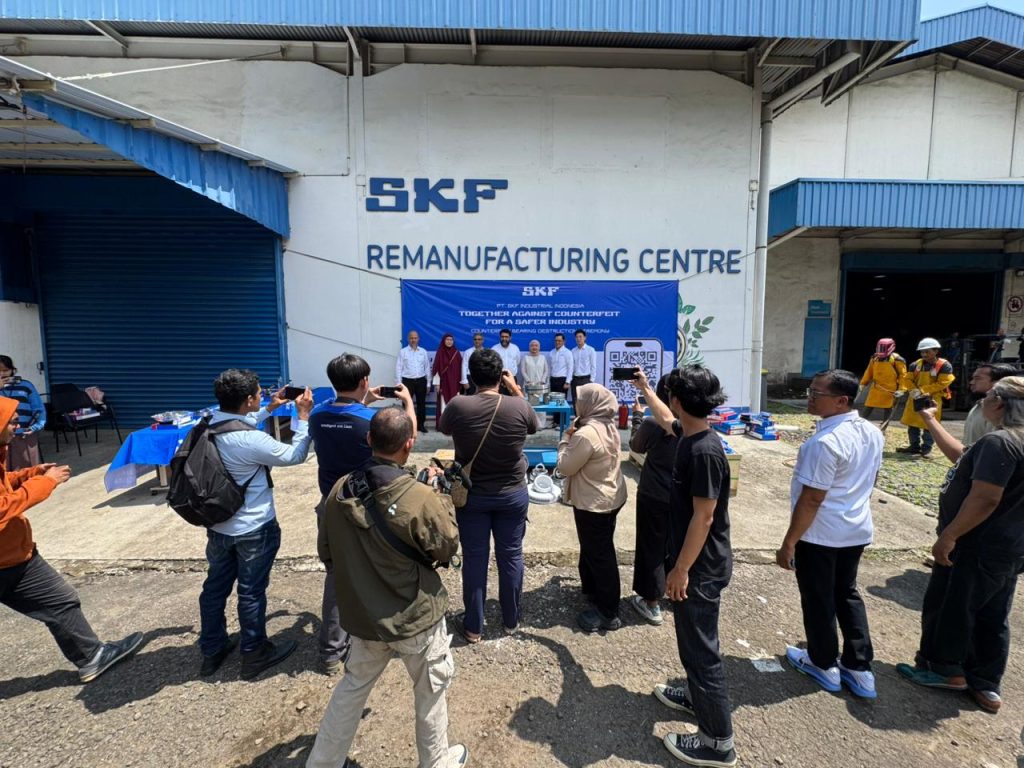
This operation represents one of the most significant counterfeit bearing seizures in Indonesia in recent years.
The Scale of the Problem
A bearing is a mechanical component found in all rotating equipment, such as cars, trains, computers, elevators, and washing machines. The quality and performance of bearings significantly impact the secure operation of equipment. Bearings are designed to handle specific loads and speeds, and their specifications are listed in the respective brand and manufacturers’ catalogs.
Counterfeit bearings pose serious mechanical and safety risks. Unlike genuine SKF components, engineered and tested to stringent quality standards, counterfeits are manufactured without proper materials, precision, or inspection. Counterfeits are highly unreliable, threatening worker safety, halting production lines, and damaging critical infrastructure in key sectors such as manufacturing, energy, transportation, and construction.
The Jakarta seizures confirm a troubling pattern. Counterfeiters are becoming increasingly organised, distributing products through online marketplaces, hidden storage facilities, and multi-channel retail networks. Products were recovered from warehouses, residential properties, and storefront-style locations.
Coordinated Enforcement in Action
The success of this operation reflects a model of enforcement that combines verified intelligence with decisive action by law enforcement. Acting on intelligence provided by the rights holder, Indonesian police executed targeted raids at multiple locations across Greater Jakarta.
This demonstrates how close coordination between clients such as SKF and SKC Law can deliver effective strategies to dismantle counterfeit supply chains. It also demonstrates that Indonesia’s enforcement framework, when properly engaged, is capable of delivering meaningful results at scale.
What can customers do to protect themselves?
The recommendation for buyers is to source from authorized distributors of the major brands – this is the best practice to protect themselves from counterfeit product. A list of official distributors can be found at Find a Distributor (ID).
As the visual appearance of counterfeits today is very good, it is not always possible for customers to tell the difference on their own. To help users, SKF offers a smartphone application, available free of charge, which can be used to verify SKF products. It can be downloaded from the QR below:

Counterfeit bearings, quick facts:
- Found in all countries and industries.
- Customers unknowingly buy counterfeit, risking machine failures and accidents.
- Visual appearance of the package is generally good, but performance is highly unreliable
- Mostly originate from Asia but are traded globally.
- All major bearing brands are affected.
- The price end-users pay are relatively close the market price of genuine
Counterfeit bearings can cause:
- Damage to critical machinery.
- Secondary damage (e.g., fire, costly downtime, loss of electricity).
- Injuries to people in safety critical applications
Counterfeit supply chain, illegal trade across borders
Bearings for aftermarket purposes are often sold through retail networks. The major brands have authorized distributors in nearly all countries, while non-authorized retailers source and sell the major brands on the open market. Counterfeit bearings are mainly manufactured in Asia, particularly China, and are sometimes routed through Hong Kong or Singapore. This illegal trade poses risks to consumers and businesses and affects tax revenues.
Key Takeaways for Rights Holders
This enforcement action offers several key takeaways for rights holders operating in Indonesia. Intelligence-led enforcement, supported by verified information and close coordination with police authorities, can be effective in identifying and dismantling counterfeit networks.
At the same time, counterfeit distribution continues to evolve, with online marketplaces and concealed storage locations becoming increasingly common, requiring rights holders to adapt their monitoring and enforcement strategies.
Consumer safety also remains a central concern, particularly where counterfeit industrial components may pose real risks to users.
Ultimately, a comprehensive enforcement programme, including surveillance, investigation, seizure, prosecution, and destruction, remains the most effective way to address counterfeiting at scale.
Moving Forward
Indonesia has made progress in strengthening its IP enforcement framework. The introduction of corporate criminal liability provisions under the new Criminal Code (KUHP), ongoing reforms to the trademark registration system, and strengthened cooperation between rights holders and law enforcement all contribute to a maturing enforcement environment.
However, challenges remain. Counterfeit networks continue to adapt, and rights holders must implement a proactive perspective and invest in enforcement programmes to protect their brands and customers in the Indonesian market.
Contact our team to discuss your IP enforcement strategy in Indonesia or follow us on LinkedIn for the latest updates. Submit a custom enquiry in our Contact Page.
This content is provided for general information only and does not constitute legal advice. For advice on specific matters, contact enquiries@skclaw.id.