Focus Group Discussion on IP-Backed Financing
The Otoritas Jasa Keuangan (OJK) or Indonesia’s Financial Services Authority convened a Focus Group Discussion on financing for micro, small and medium enterprises (MSME) based on intellectual property. SKC Law presented the intellectual property consultant’s perspective. Partner Bagus Lestanto addressed the implementation of intellectual property as collateral in financing for MSME.
The presentation focused on legal practice: what makes intellectual property usable as security for financing, and what a lender must verify before relying on it.
What SKC Law Presented
SKC Law’s presentation covered six areas: intellectual property as an object of security for financing, the implementation of intellectual property-based financing, legal due diligence over an intellectual property portfolio, identification and mitigation of legal risk, issues and challenges, and practice recommendations.
The Legal Basis
The presentation identified four instruments as the legal basis for intellectual property-based financing for MSME.
| Instrument | Subject |
| Law No. 24 of 2019 | The Creative Economy |
| Government Regulation No. 24 of 2022 | Implementing regulation of Law No. 24 of 2019 on the Creative Economy |
| Permenekraf No. 6 of 2025 | Intellectual Property Valuers (Regulation of the Minister of Creative Economy / Head of the Creative Economy Agency) |
| POJK No. 19 of 2025 | Ease of Access to Financing for Micro, Small and Medium Enterprises (OJK Regulation) |
Fiduciary Security over Intellectual Property
Intellectual property is movable property in intangible form. Security over it therefore takes the form of fiduciary security, or jaminan fidusia. Law No. 42 of 1999 defines that as a security right over movable property, tangible or intangible. It secures repayment of a defined debt, gives the recipient a preferred position against other creditors, and leaves the asset in the hands of the party granting it.
Two consequences follow. The creditor takes a preferred position over the encumbered asset. The debtor keeps control of the intellectual property throughout the security period.
Express statutory support sits in two regimes. Article 16(3) of the Copyright Law allows copyright to serve as the object of fiduciary security. Article 108(1) of the Patent Law does the same for patent rights. Article 16(2) of the Copyright Law and Article 74(1) of the Patent Law also allow the underlying right to be transferred, in whole or in part, by inheritance, grant, endowment, will, written agreement, or other cause permitted by law.
Which Intellectual Property Qualifies
Not every asset in a portfolio is financeable. Two conditions apply to the intellectual property itself:
- It is recorded or registered at DGIP.
- It is already being managed, whether by the owner directly and/or through a transfer of the rights to another party.
The object of the security can also be broader than the right itself. Alongside fiduciary security over intellectual property, the framework recognises two further objects of debt security: contracts in creative economy activities, and receivables in creative economy activities.
The Transaction, End to End
The chain runs through seven stages: the MSME as a creative economy business, the intellectual property portfolio, valuation of that portfolio, legal due diligence, binding and registration of the fiduciary security, disbursement by the lender, and execution of the collateral if the borrower defaults. The presentation identified seven parties involved: the MSME as debtor, the bank as creditor, the intellectual property valuer, the intellectual property consultant, the notary, DGIP, and the Fiduciary Registration Office.

Legal Due Diligence over an Intellectual Property Portfolio
Legal due diligence over an intellectual property portfolio establishes three things. First, that the debtor holds valid rights and the authority to encumber them. Second, that no third-party right, claim, dispute, or encumbrance sits over the asset. Third, that no legal condition blocks the use of the asset as collateral or the enforcement of the security interest over it.
In practice the review covers six areas:
- Selection of the assets that will carry the financing scheme.
- The status of each right and the documents behind it.
- Ownership and the history of transfers.
- Assignments, licences, and third-party rights.
- Disputes and potential claims.
- Existing encumbrances over the intellectual property.
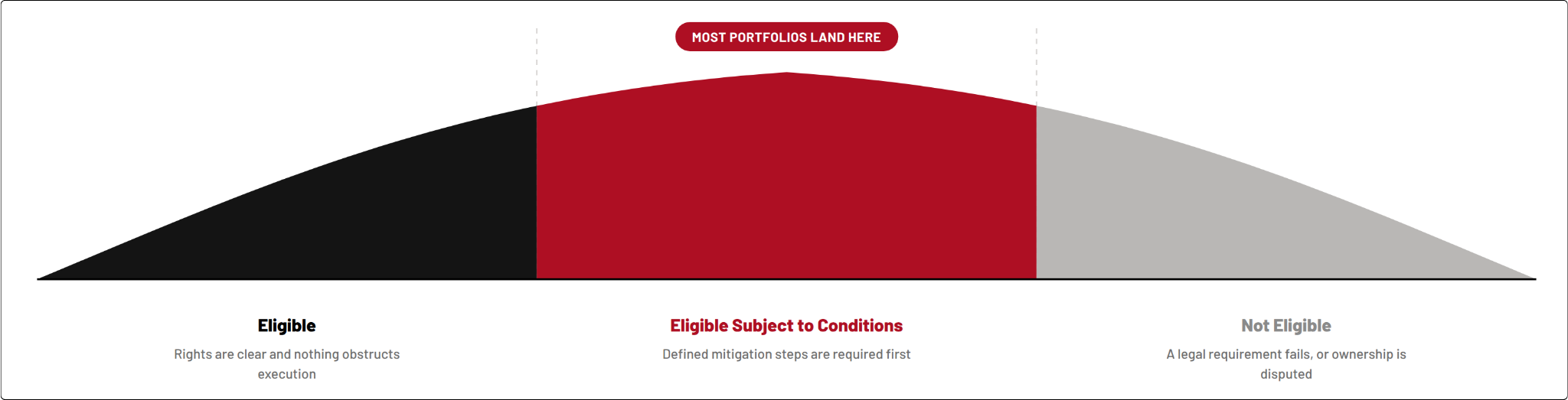
The output is a finding, and there are only three.
Eligible. The legal status, ownership, and authority are clear, nothing material sits over the asset, and nothing obstructs execution.
Eligible subject to conditions. The intellectual property can in principle serve as collateral, provided defined mitigation steps are completed before or during the financing. A licence may need clarification, adjustment, or third-party consent. The records at DGIP may not match the actual ownership position. A prior encumbrance or third-party interest may need releasing first.
Not eligible. The asset fails one or more legal requirements, a third-party dispute materially affects ownership, or a legal condition makes it impossible to use the asset as collateral or to enforce the security interest over it.
The discipline is the same one that applies when due diligence tests an IP portfolio in a transaction.
Issues and Challenges
The presentation identified three issues and challenges.
The first is legal certainty. The express provisions on fiduciary security over intellectual property sit in the Copyright and Patent regimes. No equally explicit sectoral provision covers the other categories of intellectual property.
The second is that there is no specific, integrated mechanism for enforcing a security interest over intellectual property. The presentation set out how default is handled under the general framework. Default is determined under the financing agreement, and execution follows the Fiduciary Security Law. The collateral is sold or otherwise executed, and the proceeds settle the debtor’s obligations. Any resulting transfer of rights must then be filed with DGIP according to the category of intellectual property involved.
The third is cross-sector involvement. The scheme depends on the lender, the valuer, the consultant, the notary, the Fiduciary Registration Office, and DGIP.
Recommendations for Strengthening Practice
1. Conduct legal due diligence on the intellectual property. Before the intellectual property is relied on as collateral, the review should confirm the debtor’s rights and authority, the absence of third-party claims and encumbrances, and that nothing obstructs execution.
2. Ensure the strength of the binding documents. The security is created through binding and registration of the fiduciary security, which comes before disbursement in the transaction chain.
3. Ensure the execution mechanism and the transfer of intellectual property. The general fiduciary security route applies, but the steps that follow it are IP-specific. The documents should state how default is determined, how the collateral is executed, and how any transfer is recorded at DGIP.
4. Set out the financing requirements and the debtor’s obligations. The financing documents should state the requirements for financing and the obligations the debtor must meet.
Connect With Us
SKC Law advises clients across the full range of intellectual property matters in Indonesia, from registration and recordal through to portfolio review, commercial exploitation, and enforcement. Recent work includes presenting the consultant’s perspective at OJK’s Focus Group Discussion on IP-backed financing for MSME in September 2026. The firm also runs portfolio and ownership reviews that test rights against the public register before a transaction is signed.
For advice on intellectual property as financing collateral, portfolio review, or recordal at DGIP, contact our team at enquiries@skclaw.id.
Submit a custom inquiry via our Contact Page.
Follow us on LinkedIn for more on intellectual property services in Indonesia.
This content is provided for general information only and does not constitute legal advice. For advice on specific matters, contact enquiries@skclaw.id.